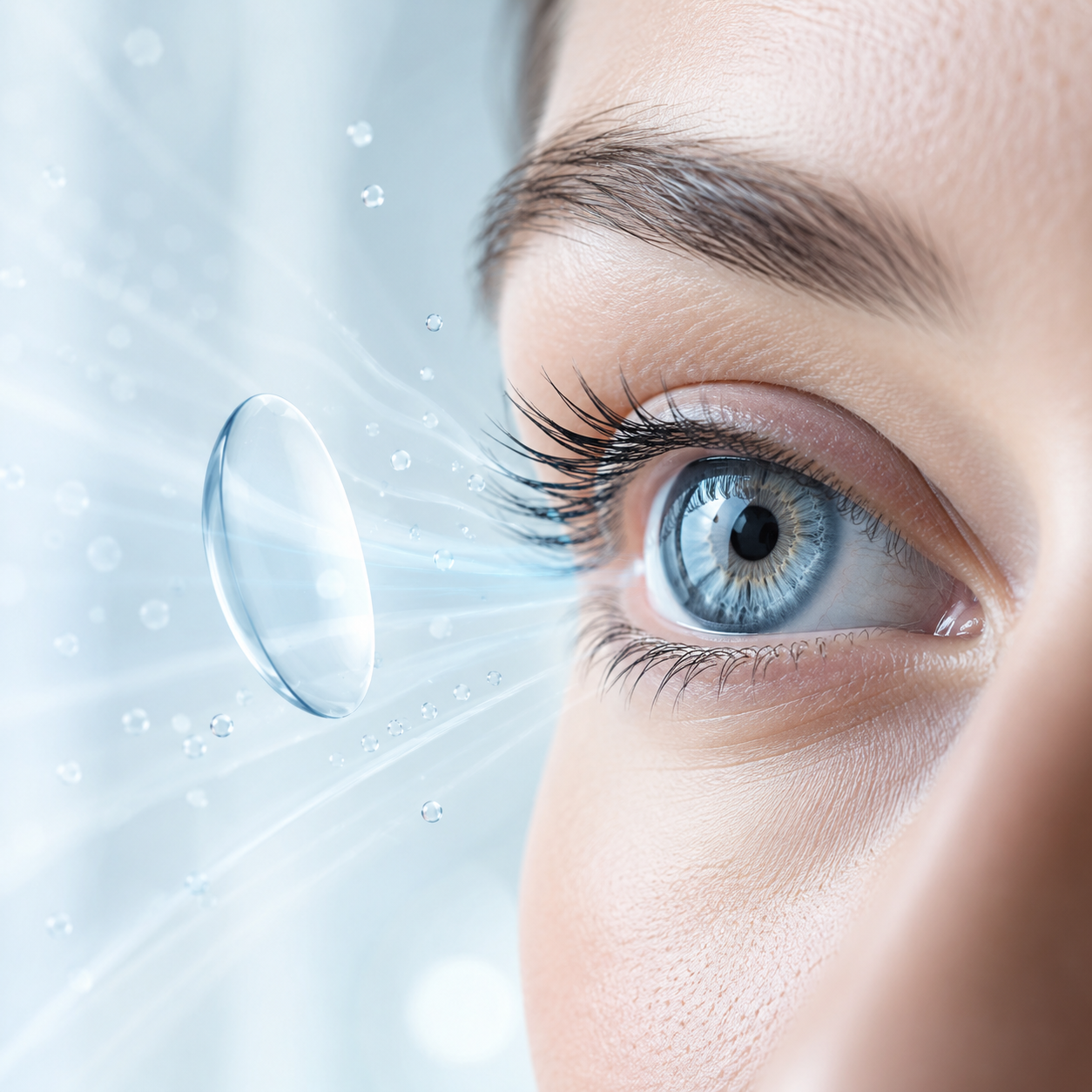
Contact lenses may be small and nearly invisible, but the science behind them is complex. One of the most important advances in modern lens design is the development of silicone hydrogel—a material that has transformed eye health and comfort for millions of wearers worldwide.
At Clearlii, silicone hydrogel sits alongside our classic hydrogel lenses—because the best material depends on the wearer. So what makes silicone hydrogel special, why does oxygen transmission matter, and how do the two materials compare? This article explains the science clearly and simply, so you can choose the lens that fits your eyes and your day.
Why your eyes need oxygen
Unlike most tissues in your body, the cornea has no blood vessels. It relies almost entirely on the air around you for oxygen. Oxygen diffuses through your tear film into the corneal surface, keeping cells active, clear and healthy.
If your cornea doesn't get enough oxygen—a condition called corneal hypoxia—problems can arise, such as:
- Redness and irritation
- Swelling of the cornea (oedema)
- Reduced tear exchange
- Increased risk of infection
- Long-term complications if hypoxia is persistent
For decades, the biggest challenge in lens design was balancing hydration with oxygen flow.
How hydrogel lenses work
Classic hydrogel lenses are made of water-loving polymers that absorb and hold water, which in turn carries oxygen to the cornea. It's a proven, time-tested technology: hydrogel lenses are soft, easy to handle and exceptionally comfortable, and their high water content gives many wearers a fresh, cushioned feel from the moment they go in. For daily-wear schedules—where lenses come out each evening—they remain an excellent choice trusted by millions.
Their one trade-off is in the physics of the material: because oxygen travels with the water, the amount that can reach the cornea is linked to water content. For most daily wearers that's perfectly sufficient. For higher prescriptions, thicker lenses or longer wearing hours, a material that delivers even more oxygen can be an advantage—which is where silicone hydrogel comes in.
"Both materials are safe and comfortable. Silicone hydrogel simply lets more oxygen reach the cornea—useful for higher prescriptions and longer days—while classic hydrogel remains a great everyday choice."
The silicone-hydrogel breakthrough
Silicone is naturally highly permeable to oxygen. By combining silicone with water-loving hydrogel, manufacturers created a material that delivers oxygen through the silicone channels while keeping the surface hydrated and comfortable. The result is a lens that supports corneal health even at higher prescriptions and during longer wear.
At Clearlii, we pair silicone hydrogel with hyaluronic-acid hydration, vitamin enrichment and our Silk & Soft Edge design—so oxygen, moisture and comfort work together rather than competing.
Two materials, different strengths
This isn't a case of old versus new—it's about matching the lens to the wearer. Classic hydrogel lenses like Clearlii Daily, Clearlii Monthly and our vitamin-enriched Clearlii Vitamin deliver soft, hydrated, all-day comfort that suits the great majority of daily wearers. Silicone-hydrogel lenses such as Clearlii Daily Advanced and Clearlii Monthly Advanced add maximum oxygen flow for higher prescriptions and longer days. Your optician can help you decide which is the better fit—and with Clearlii, you don't have to compromise on comfort either way.
What this means for you
Whichever material you choose, more comfort comes from the whole package—oxygen, hydration and a smooth edge working together through a full day of wear, whether you're in front of a screen, outdoors, or simply living a busy life. It's science you don't have to think about, working quietly with every blink.